



In the PYP, we often display the ten Learner Profile attributes on colorful posters around the school but how often do we stop and ask ourselves: are we living them?
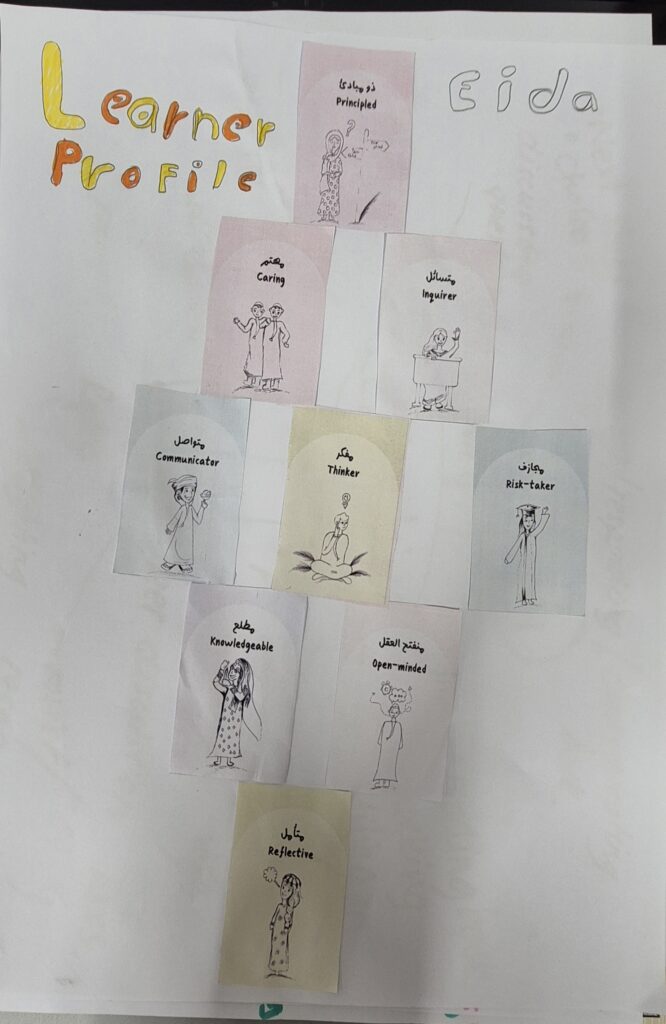
The beauty of the Learner Profile lies in its flexibility. Schools can adapt and edit the language of the attributes to fit their local context and values. What truly matters is not what we call them, but how we model them and make them part of our daily lives. It’s also important to see these attributes in many languages, not just English to reflect the importance of multilingualism.
If we say we are caring, then this value should be reflected in our practices, not only in the classroom, but across the entire school community. For example, a school that values caring might ban single-use plastic bottles and replace them with reusable ones, maybe even offering one to every teacher as a meaningful welcome gift. Caring, then, becomes a living value, not a printed word.
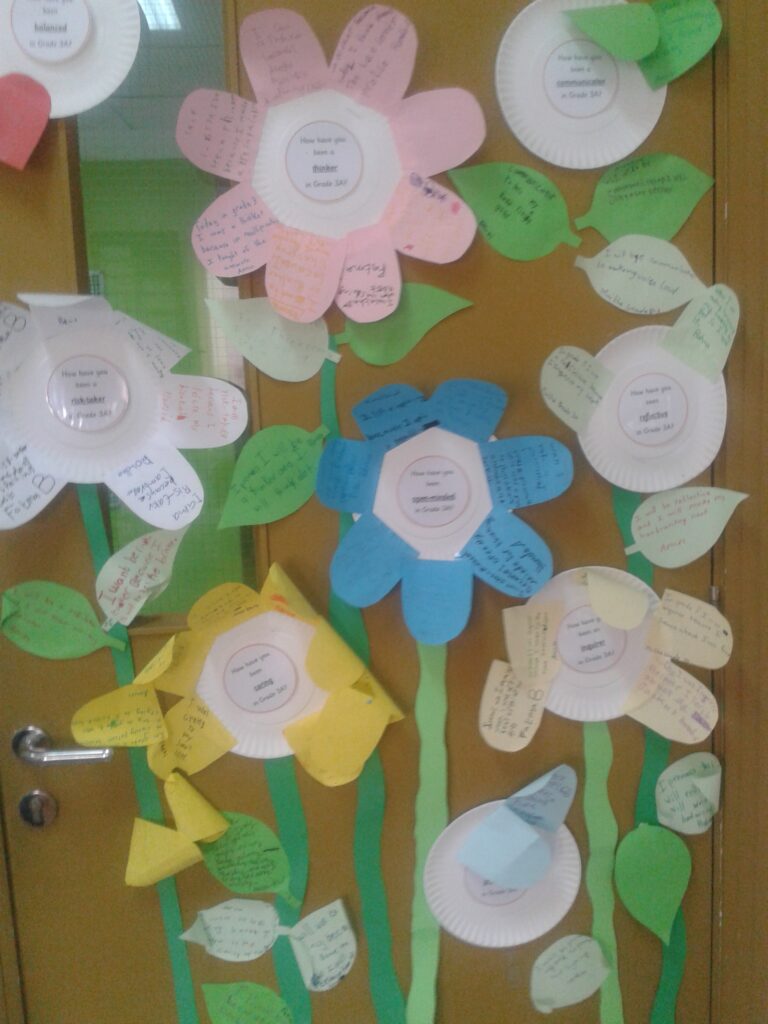
In the schools I worked in, every time a student demonstrated a Learner Profile attribute, the teacher wrote their name and the attribute and the reason on a star, which was then added to a black sky, a sky that became brighter each week with the learners’ actions. In another school, the demonstration of the attributes were written on flower petals by students, creating a beautiful garden of values that grew throughout the year. These visual reminders helped everyone see that learning and character are always blooming.
For me, the most important attribute is balanced. Without balance, even the most passionate educators can burn out. I personally make sure to take time each year to disconnect, recharge, and reconnect with myself and my purpose. Balance is not a luxury, it’s a condition for growth and creativity.
Remember: it’s one learner profile, with ten attributes. These attributes are interconnected and should grow together. To help learners explore this connection, try this simple yet powerful classroom activity:
- Reflection Journal: keep a reflection journal and ask from the students to do the same
- Team-building challenges: Use cooperative games to strengthen communication and collaboration
- Story unpacking: Read stories and discuss which attributes the characters demonstrate and how they grow through them.
- Diamond Ranking: Ask students to remove one attribute, then sort the nine from the most to the least important using the diamond ranking and explain why. The discussions that follow are often deep, revealing what students truly value
At the beginning of each term, students and teachers can choose one attribute they want to develop further, reflect on actions they can take, and revisit it at the end of the term to see their growth. This empowers everyone to take ownership of who they are becoming, not just what they are learning. Self-assessment is key.
We are all aware of the three dimensional curriculum model KUD :
- We Know facts,
- We Understand concepts,
- We Do skills,
Let’s add a fourth dimension, the Be through the Learner Profile.
But let’s not forget, the Learner Profile is not just for students. We, the teachers, are learners too. And so are the parents. The Learner Profile is a common language that unites us as a learning community. It guides how we speak, act, and support one another. Schools should also take the time to train and engage parents and all the members of the learning community (helpers, drivers, security) in understanding and using this language , creating consistency between the school and the whole communtiy.
The Learner Profile is not a checklist. It’s a philosophy of learning and living, it connects who we are, how we learn, and how we act in the world.
So, next time you walk through your school and see the Learner Profile posters, pause for a moment and ask yourself: Which attribute am I modeling today?
A successful PYP school is not seen only in its walls or documents; it’s seen in the playground, the hallways, and every interaction where the Learner Profile comes to life.
Wonderful