



One month into my new role as a part PYP Coordinator, I am beginning to move beyond the first impressions. The first week was mainly about getting to know people, understanding the systems and finding my way around a new school. Now I am starting to look more closely at how learning is designed, how teachers collaborate and how different parts of the school connect. I am still learning every day, but I am also beginning to see some interesting practices that are worth sharing.
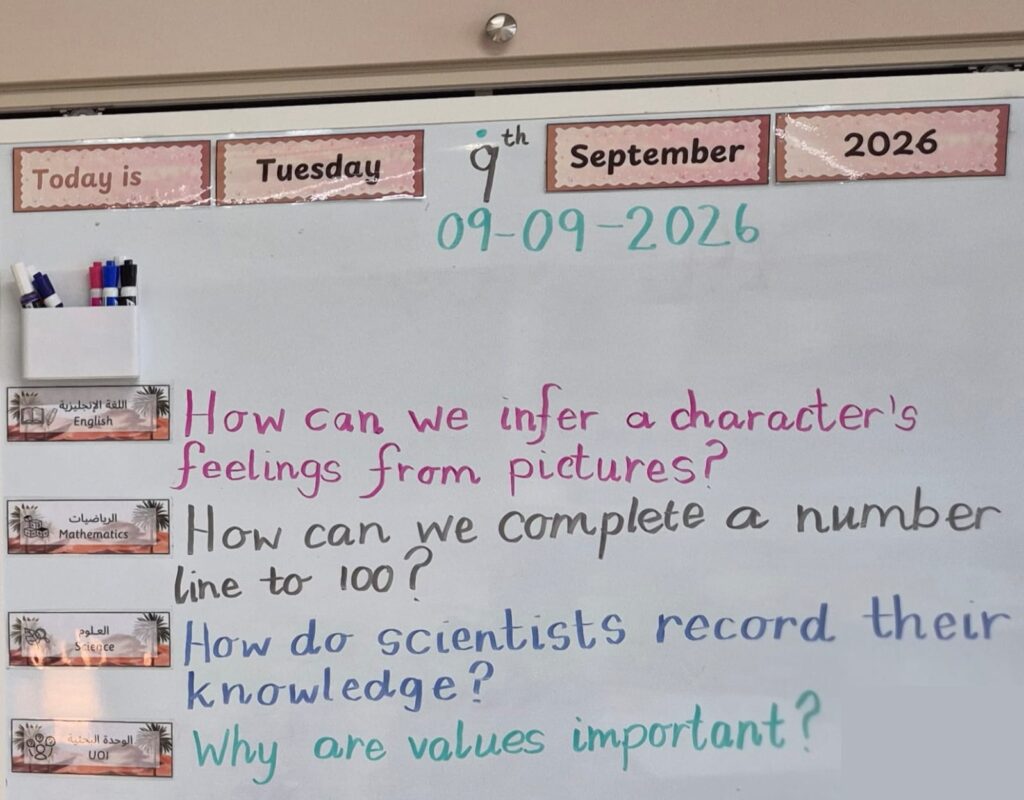
What if the timetable became an invitation to think?
One of the changes that caught my attention was the way teachers are now sharing their daily timetables. Instead of simply listing the subjects and activities planned for the day, they are framing the learning through questions.
This idea came from something we read on MyIB in the section on Learning and Teaching, under conceptual understanding:
“Specified concepts are a starting point. They help to frame a unit of inquiry and drive learning experiences. When these concepts are explored through questions, the inquiry is purposeful and manageable.”
This made me think about the difference between a timetable that tells us what is happening and one that gives us an insight into what students are being invited to think about. A question can make the learning intention more visible and can help teachers, students and even visitors see the thinking behind the experience. It is a small change in the way we communicate the day, but I find it an interesting reflection of a wider shift towards making learning more purposeful. Remember, the human brain loves questions, and we teachers we model the IB learner profile attributes inquirer by asking questions.
Personalised learning that responds to students
Another structure that has been particularly interesting for me is the personalised learning session. Twice a week, students have a thirty minute session where they are grouped according to their learning needs, with no more than six students in a group. Some students receive additional support in areas where they are experiencing difficulties, while others are challenged further when they are ready to extend their learning.
What I particularly appreciate is that this is not limited to one language. Depending on the needs of the students, the support or challenge can take place in Arabic or English.
I had the opportunity to work with one of these groups during the month, and it was a beautiful experience. Working with a small group gives you the opportunity to listen more carefully, notice individual needs and respond in the moment. It also reminded me that personalised learning is not simply about creating different worksheets or giving students different tasks. It is about understanding where learners are and creating opportunities for them to move forward from there.
When two languages become two ways of discovering
Another structure that was new to me was what the school calls Bilingual Discovery. Twice a week, the Arabic and English teachers work together to design learning experiences connected to the unit of inquiry.
I find this particularly interesting because bilingual learning can easily become a matter of dividing time between two languages. Here, the intention is different. The two teachers work together around learning experiences connected to the unit of inquiry, creating opportunities for students to use both languages in meaningful ways.
It also creates a different kind of collaboration between teachers. Instead of thinking about Arabic and English as two separate lessons, the teachers have an opportunity to think together about how language can support understanding.
Learning together as educators
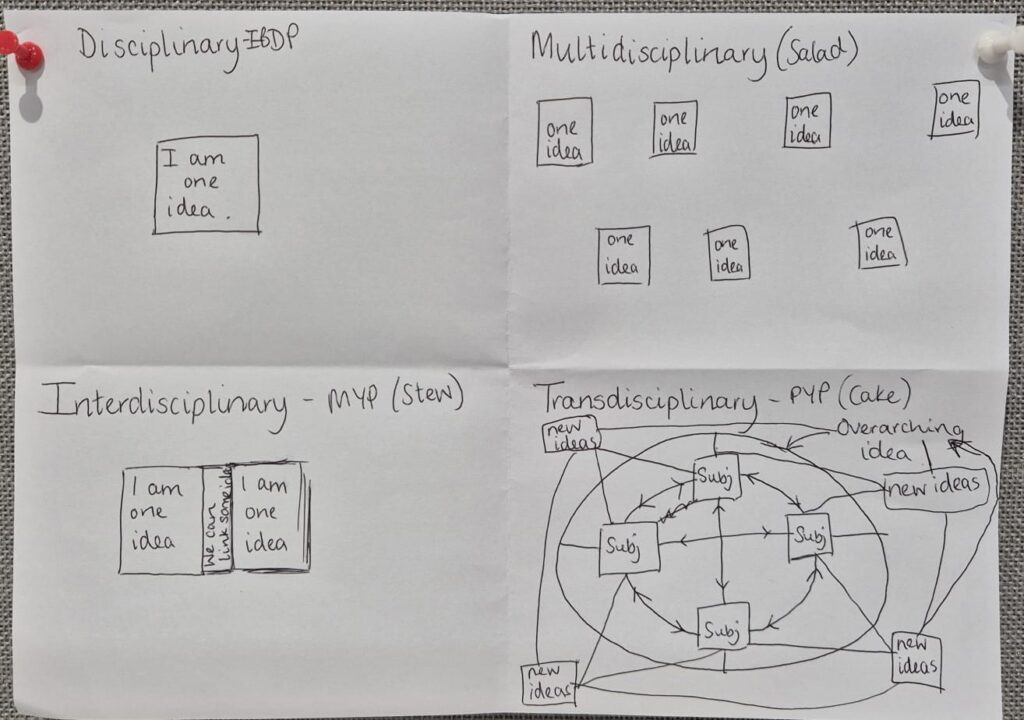
Our new teachers also had the opportunity to attend the IB Category 3 workshop, Connecting the Subject, and our Arabic and English Coordinators attended as well. It was a valuable learning experience, particularly because we explored the differences between multidisciplinary, interdisciplinary and transdisciplinary learning.
It was also a good reminder that professional learning does not have to happen in isolation. Bringing teachers and coordinators together into the same learning experience creates a shared language and gives people an opportunity to explore how ideas might look in their own context.
For new teachers in an authorised IB World School, they can attend cat 2 and cat 2 IB workshops not only cat 1.
Connecting with parents
Learning communities extend beyond teachers and students. During our parents' curriculum evening, parents had the opportunity to meet the teachers, learn more about the curriculum and begin building relationships with the people who will be working with their children throughout the year.
I believe these opportunities are important because relationships with families cannot begin only when there is a concern or a problem. Building connections early creates a stronger foundation for communication and collaboration later. If we want to talk about learning communities, then parents need to be part of that conversation.
Looking beyond the PYP
One of our key areas of focus this year is the Approaches to Learning. This has also given me an opportunity to work closely with the MYP Coordinator and the DP/ CP Coordinator as we think about how we can develop this work across the whole school.
I am particularly interested in how the five IB ATL categories connect with the school's own subskills and with the OECD skills identified as important for the future of work. This is part of our school improvement plan, so the conversation is not simply about adding another initiative. It is about thinking carefully about the skills we want students to develop and how these skills can become more coherent as students move through the school.
There is much more to share about this work, so I will leave the deeper exploration for another blog.
Collaborative planning and seeing learning in action
Our collaborative planning for Unit 2 also took place during these weeks. One thing I was pleased to see was that teachers across the school are now aware of the next unit, while specialist teachers are also thinking about how their subjects can connect with the learning taking place within the unit of inquiry.
This is where collaborative planning becomes more than a meeting on the timetable. When teachers understand where the learning is going, they can begin to look for meaningful connections rather than trying to create them at the last minute.
I have also been visiting many classrooms, simply observing the dynamics, interactions and learning experiences taking place. One moment that stayed with me was a mathematics lesson where students were working with a wide range of manipulatives. There was movement, discussion, exploration and interaction with mathematical ideas. I found myself smiling as I watched because these are the moments that remind us that mathematics does not have to be reduced to pages of exercises. Students can touch, move, represent, test, discuss and make sense of mathematical ideas.
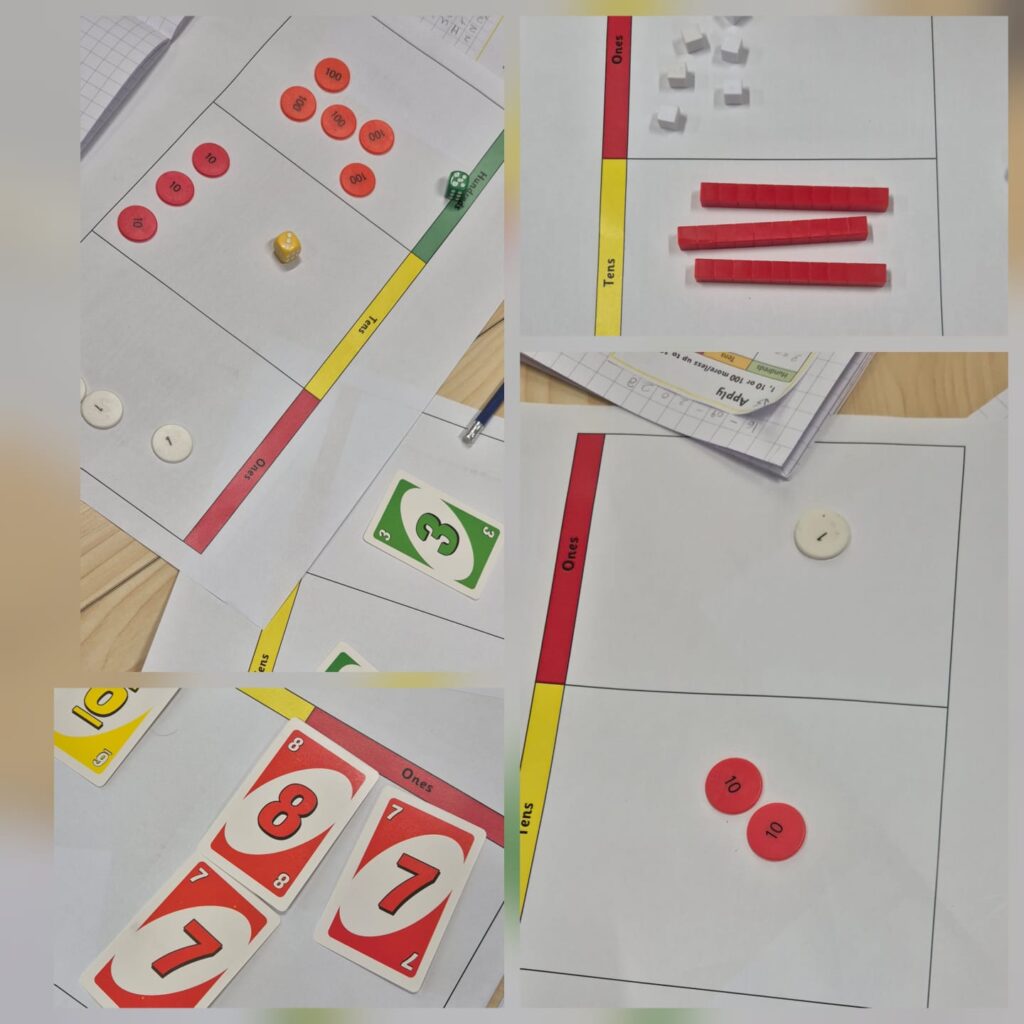
These classroom visits are also helping me understand the school in a way that meetings and documents never could. A school reveals itself through what happens in its classrooms.
Our goals
Another important part of these first few weeks was setting our own professional goals. Each teacher had the opportunity to sit with their line manager, reflect on their current practice and agree on meaningful goals for the year ahead. As leaders, we went through the same process. We completed a self-evaluation, reflected on our own practice and discussed our professional goals with our line managers. I appreciated this because professional growth should not be something we ask of others without experiencing it ourselves. As leaders, we also need to be learners, open to feedback, reflection and continuous growth.
One month in
One month may not seem like a long time, but there is already so much to observe, learn and think about. I am beginning to see how different pieces connect: personalised learning, bilingual discovery, collaborative planning, professional learning, parent engagement, ATL development and the everyday experiences happening in classrooms.
I am still learning my way around this new role, and I am sure there will be many things I will get wrong, rethink and learn from along the way. For now, I am enjoying the opportunity to look closely, ask questions, work alongside teachers and students, and understand what makes this particular learning community unique.
This is only the beginning of the journey.
More stories and ideas to come.
Together we learn & grow