


As I continue my journey as a PYP Coordinator, I am becoming increasingly aware that some of the most meaningful moments happen when we create opportunities for people to learn with and from one another. Whether it is parents trying to understand the educational approach their children experience every day, or teachers experimenting with a new way of planning together, these moments remind me that building a learning community takes more than sharing information. It requires participation, conversation and a willingness to try something different.
Over the past few weeks, two experiences stood out for me.
Bringing parents into the learning journey
One of our priorities this year is approaches to learning. Together with the MYP and DP/CP coordinators, we planned a professional development session for parents, delivered in both Arabic and English.
The session focused on IB education, the school's learning journey and the Approaches to Learning (ATLs). We wanted parents to leave with more than information about the IB programmes. We wanted them to experience some of the thinking and learning approaches that we value in our classrooms.
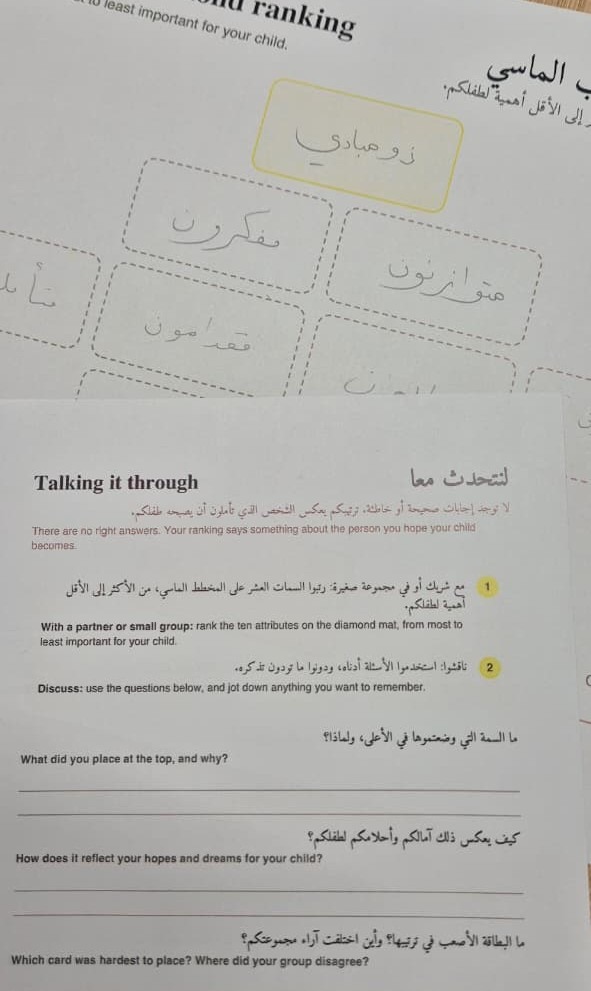
For this reason, we made the session hands-on. Instead of simply presenting the IB Learner Profile, we invited parents to sort the attributes from what they considered the most important to the least important. This led to interesting conversations and encouraged parents to explain their choices. It also opened up an important question: can we really rank these attributes, or do they become meaningful through the way they work together in our daily lives?
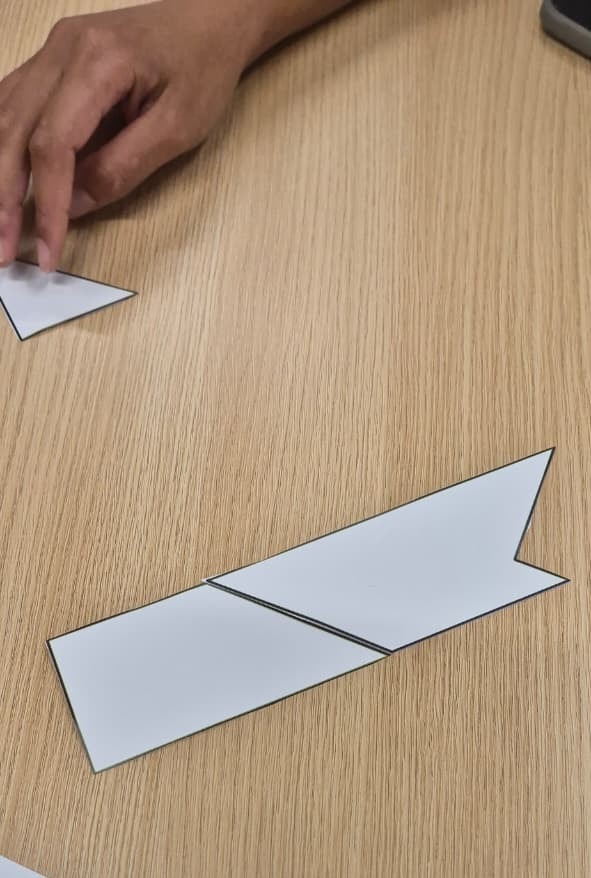
We then introduced the ATLs through a T-shaped puzzle activity. Parents worked with the puzzle as a way of exploring the different skills and understanding how these contribute to learning. It was an opportunity to move beyond knowing the five ATL categories by name and begin thinking about what these skills look like in practice.
At the end of the session, parents received a guide with practical suggestions on how to teach and develop ATLs explicitly at home. We also invited them to complete a survey about future sessions, asking what they would like to learn more about. Their feedback will help us plan professional learning opportunities that respond to their interests and questions.
We also prepared the session as an asynchronous workshop and shared it with parents through the school platform. This allowed families who could not attend in person to access the learning at a time that suited them.
For me, this was an important step in seeing parents not simply as recipients of information, but as partners in the learning community. If we want families to understand the language we use at school, they need opportunities to explore it, question it and connect it to their own experiences at home.
A new approach to collaborative planning
The second experience came from a teacher who suggested trying a different approach to collaborative planning (Thanks Lua). I always appreciate it when teachers bring new ideas to the table, and I am usually happy to experiment. After all, if we encourage students to take risks, explore possibilities and learn from trying something new, we should be willing to do the same as educators.
This time, instead of having teachers sit with their usual grade-level teams to plan their next units, we organised a rotation activity involving the whole Primary team.
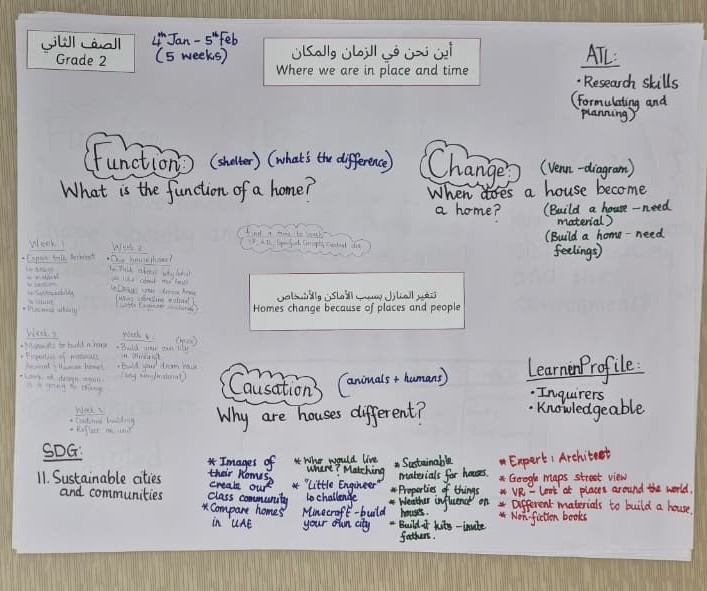
Teachers worked in mixed groups, with one teacher representing each grade level. Each representative brought the central idea of their upcoming unit to the group. The groups then had time to discuss the central idea, share possible connections and contribute ideas.
After each round, the grade-level representatives rotated to another group. We repeated this process five times, giving each representative the opportunity to hear from all five groups. This meant that every central idea benefited from the perspectives and suggestions of teachers from across the Primary team, rather than only those teaching the same grade and the specialists.
At the end of the activity, teachers returned to their grade-level teams, bringing with them the ideas and suggestions collected during the rotations. They now had a wider range of perspectives to consider as they continued planning their new units.
What I particularly liked about this approach was the opportunity it created for teachers to look beyond their own grade level. Sometimes, when we plan within the same team, we become familiar with the same questions and ways of thinking. Bringing colleagues from different grades together can challenge our assumptions, introduce connections we may not have considered and open up new possibilities for inquiry.
It was also a reminder that collaborative planning does not have to follow one fixed format. We can experiment with different structures, provided that we remain clear about the purpose and give everyone an opportunity to contribute.
What did teachers think?
I asked from the teachers to complete and Exit card: What went well? What can we improve?
- Most of the teachers loved the new structure
- The noticed the importance of vertical collaboration
- One feedback I’m taking to the next round of collaboration is: start as a grade level team, do the rotation, then finish as a grade level team.
Learning through trying
Looking back at these two experiences, I notice a common thread. In both cases, we moved away from simply sharing information and created opportunities for people to participate actively in the learning process.
Parents explored the Learner Profile and ATLs through practical activities, while teachers shared their thinking and built on one another's ideas during collaborative planning.
As a PYP Coordinator, I am learning that leadership is not always about introducing a new strategy or having a ready-made solution. Sometimes it is about listening to an idea from a teacher, creating the conditions for people to try it, and being open to what might emerge.
Not every new approach will work perfectly, and that is part of the process. We need to reflect, listen to feedback and make adjustments. I am enjoying this part of the journey: trying things, learning alongside colleagues and discovering new possibilities together.
There are still many ideas to explore, and I look forward to sharing what we try next.
Together we learn & grow.